
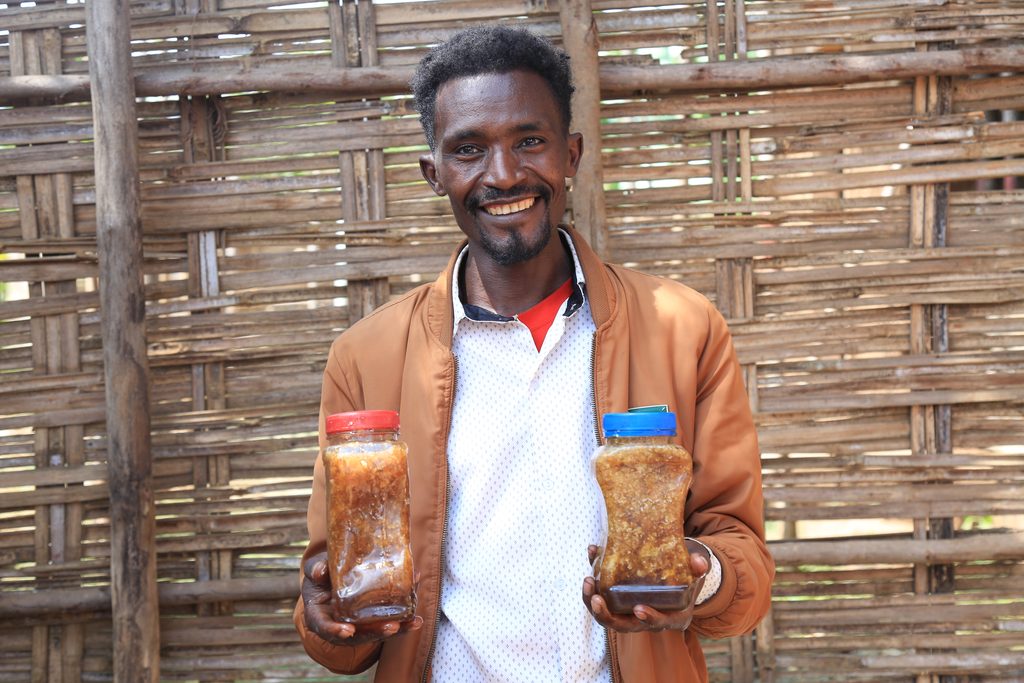
Sidama, Ethiopia — The SOS Sahel Ethiopia Mass Youth Employment on Apiculture (MaYEA) Project is creating new livelihood opportunities for unemployed youth in Sidama, enabling participants to develop sustainable sources of income through beekeeping and related value-chain activities.
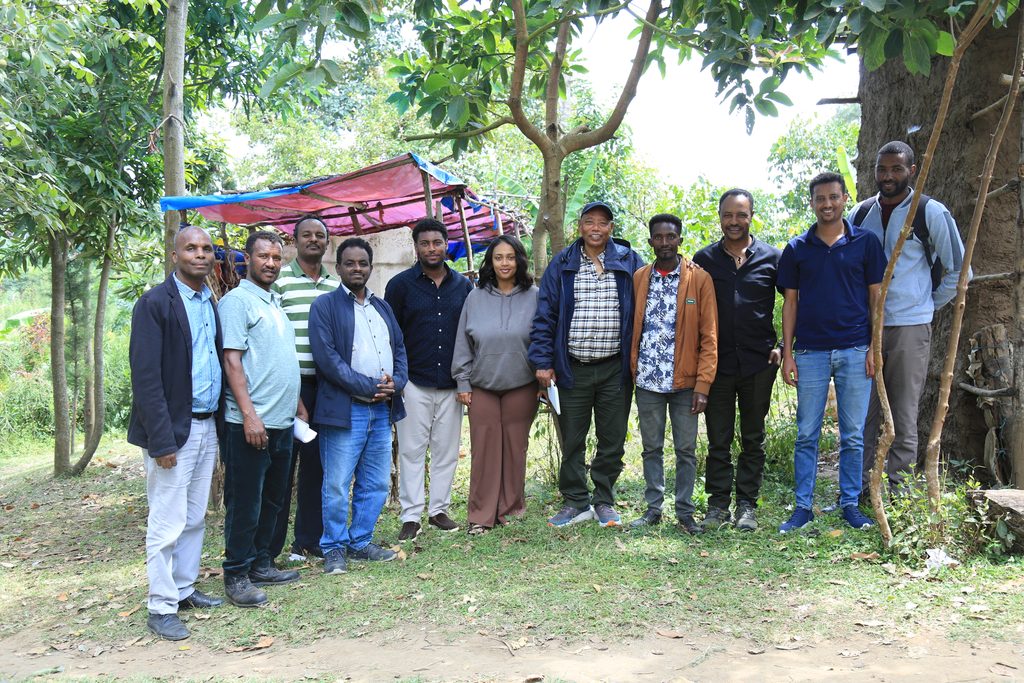
The project’s impact was highlighted during a visit by the organization’s senior leadership, led by Executive Director Ato Feyera Abdi, to a project implementation site in Derara Woreda, Sidama Cluster. The visit provided an opportunity for the leadership team to observe project activities firsthand, interact with participating youth, and gain insights into the progress, achievements, and challenges of implementation at the grassroots level.
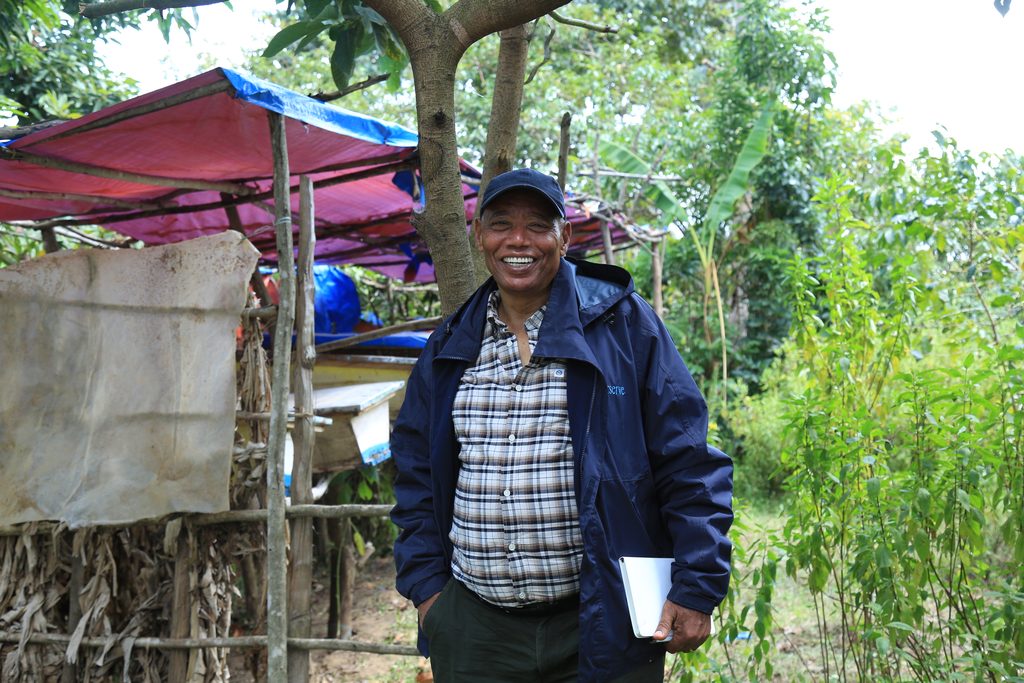
During the visit, Ato Feyera underscored that improving the livelihoods of unemployed youth remains a primary objective of the MaYEA Project. Reflecting on the changes observed among participants, he described the progress as remarkable, noting that “progress achieved from very small beginnings demonstrates the potential of apiculture to create sustainable economic opportunities for young people.”
He further urged project participants, experts, and all stakeholders not to become complacent with the progress achieved so far, but rather to strengthen their commitment, collaboration, and efforts toward realizing the project’s ultimate goal of transforming the lives and livelihoods of a large number of unemployed youth.
The journey of 24-year-old project participant Beshenu Berhanu illustrates the tangible impact of the intervention. Having had no prior knowledge or experience in honey production, he was identified and selected through the kebele-level selection process to participate in project-supported apiculture training.
The training changed his mindset and demonstrated that he could establish and grow a beekeeping business using locally available resources. Starting with just three transitional beehives, he has since expanded his operation to approximately 24 hives, comprising traditional, transitional, and modern beehives, with 14 currently occupied by bee colonies. His honey production has increased from an initial harvest of nine kilograms to approximately 45 kilograms per harvest, with two harvests annually. “The project has practically changed my life. Honestly speaking, I am a living witness to the impact it has had on me and my family,” Beshenu said. He added, “Starting from zero, I am now capable of earning a sustainable income independently.”
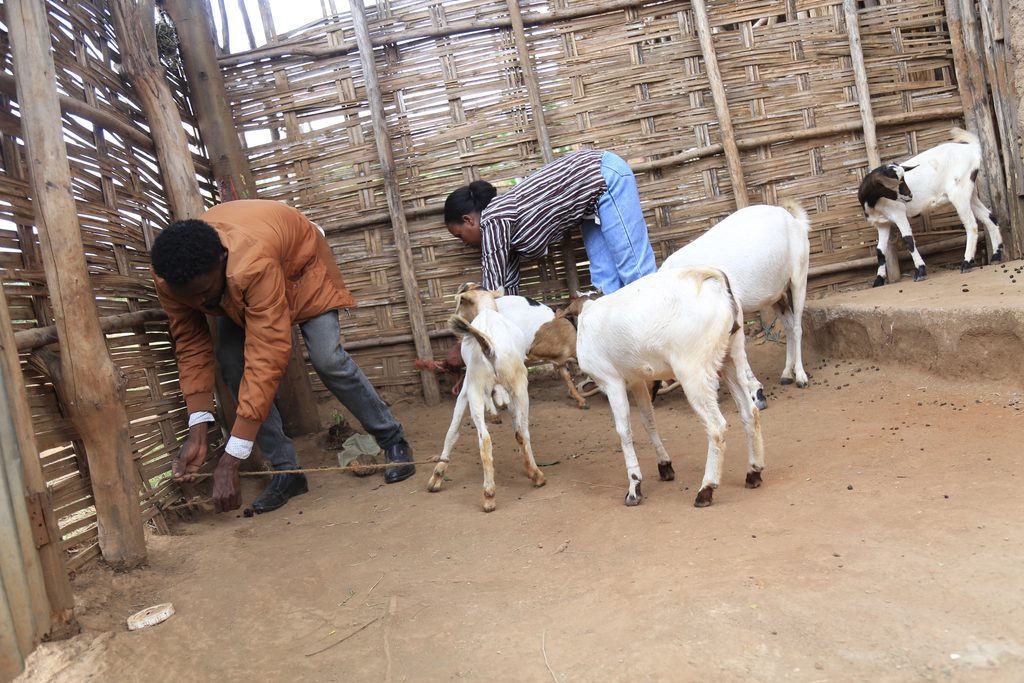
In addition to apiculture, Beshenu is also engaged in goat fattening and poultry farming, demonstrating his commitment to diversifying his income sources and pursuing multiple livelihood and business opportunities..
Beyond his own success, Beshenu has emerged as a mentor to other project participants, providing guidance on beehive preparation, colony management, and proper honey
harvesting practices. Looking ahead, he aspires to expand his beekeeping business into a fully established enterprise and become a leading honey producer and supplier serving both local and national markets.
His experience demonstrates how targeted skills development, practical training, and continued support can enable unemployed youth to transform locally available resources into sustainable livelihoods and viable businesses.